Packing for Amboseli does not require a specialist wardrobe, but it does require thinking about the conditions you will actually encounter. The park combines intense midday sun, notably cool early mornings, significant dust in dry season, and unpredictable rain in wetter months. Clothing that handles those four factors well is clothing that works for Amboseli.
This guide covers what to bring, what to avoid, and how to adjust by season.
The Core Clothing Formula
For most travellers, the foundation of an Amboseli wardrobe is simple:
- Neutral-coloured, breathable shirts and trousers
- One warm mid-layer for early morning drives
- One light outer layer for wind or rain
- Comfortable closed shoes
- Hat and sunglasses
That core handles the majority of conditions you will face, with small adjustments depending on when you visit.
Colours: What Works and What Does Not
Good choices
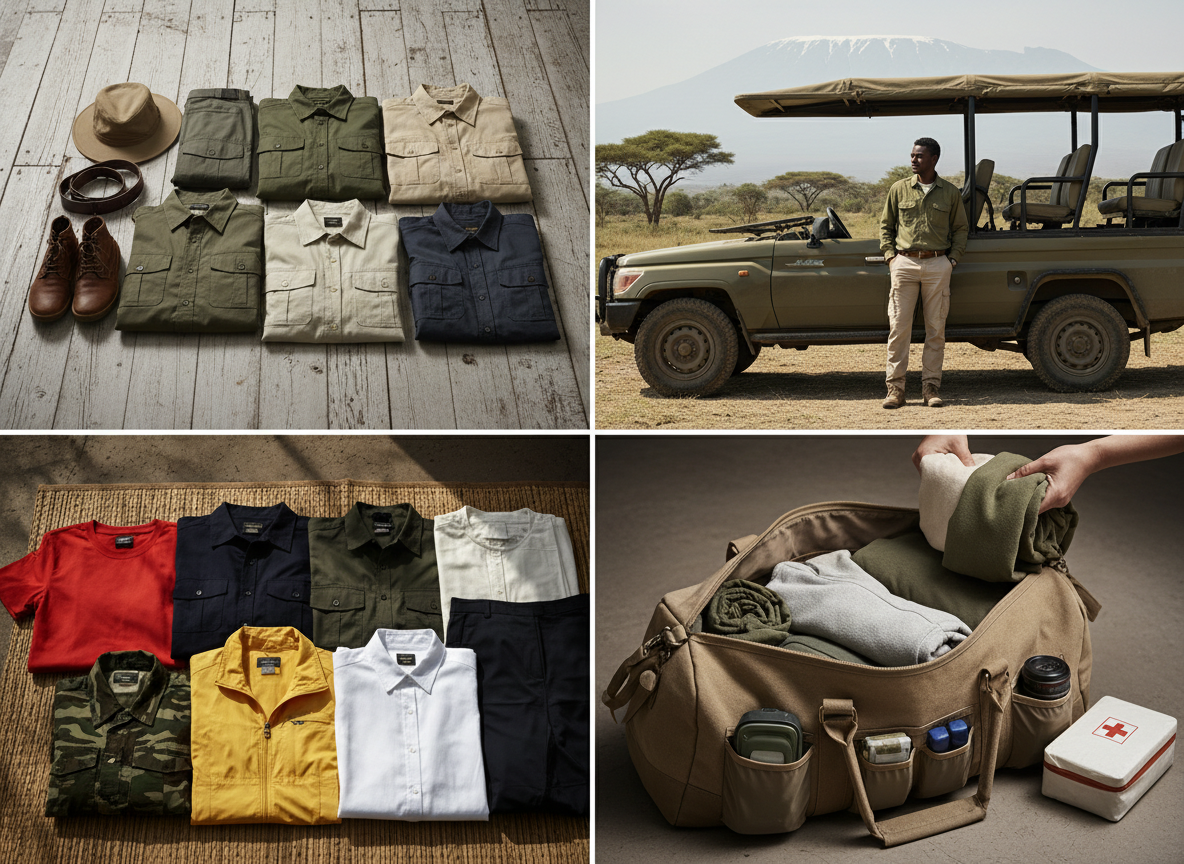
The most practical colours for Amboseli are:
- Khaki
- Olive
- Beige
- Tan
- Grey
These tones blend naturally into the bush environment, show dust less aggressively than white, and stay visually appropriate throughout the day whether you are on a game drive or relaxing at camp.
You do not need a coordinated safari wardrobe. Practical, muted clothing that behaves well over several days of dusty driving is all you need.
What to avoid
Several colour and style choices cause practical problems in the field:
- Bright colours: out of place in the bush and can feel distracting
- White-heavy outfits: dust and red soil make them difficult to maintain
- Black and very dark navy: attract more heat and are uncomfortable in the afternoon sun
- Camouflage patterns: inappropriate for civilian safari travel and restricted in some parts of Kenya
Tops
The most useful tops are breathable, long-sleeved shirts in lightweight technical or natural fabrics. Long sleeves serve multiple functions simultaneously: sun protection, dust management, morning warmth, and some insect protection in specific settings.
Pack:
- Two or three long-sleeved shirts
- One or two lighter T-shirts for warmer afternoons or camp downtime
Technical safari shirts designed for field use are genuinely worth having if you plan multiple game drives. They dry quickly, pack small, and manage heat well. That said, any lightweight breathable long-sleeve works. The material matters more than the brand.
Trousers and Bottoms
Choose:
- Lightweight safari or travel trousers in neutral colours
- Convertible zip-off trousers if you like the option
- Comfortable, non-restrictive fit suitable for sitting in a vehicle for several hours
Tight-fitting jeans and fashion-forward bottoms are poor choices. You spend long periods seated in an open vehicle, often climbing in and out at viewpoints. Clothing that restricts movement or creates discomfort over time is worth leaving behind.
Layers for Morning Game Drives
This is where many travellers underestimate Amboseli’s conditions.
Game drives start at or before sunrise. Even in months that feel warm by midday, the early-morning air in Amboseli can be genuinely cold, especially if you are in an open vehicle with wind movement at speed. A single T-shirt is not enough.
Bring:
- One fleece or medium-weight insulating layer
- One light jacket that can go over the top in the coldest conditions
The system is simple: start the drive fully layered, then remove layers as the sun rises and temperature climbs. This works better than trying to manage discomfort through a cold first hour with too little clothing.
For visitors arriving between June and August, the cool conditions are most pronounced. Those months reward the warmest layering options.
Shoes
For most Amboseli trips, two pairs of footwear are sufficient:
- Comfortable closed walking shoes or low hiking shoes for transfers and camp movement
- Easy slip-on sandals for relaxed time at camp
Heavy hiking boots are unnecessary unless your trip includes multi-day walking activities outside the standard game-drive circuit. The park itself is mainly viewed from a vehicle, and camp paths are generally easy underfoot.
Closed shoes are preferable to open sandals for game drives. They handle dust better and provide more support if you need to move quickly on uneven ground near the vehicle.
Dry Season Clothing: June to October and January to February
In the dry months, Amboseli produces the clearest mornings and strongest wildlife concentration near water. The key clothing considerations are:
- Strong sun protection during the day: hat with a full brim, good sunglasses, SPF lip balm
- A scarf or buff that covers the lower face during dusty drives
- Warm layering for dawn departures
- Breathable fabrics that do not retain body heat in the afternoon
Dust is a real issue in peak dry season. A buff or lightweight scarf around the neck can be pulled up to cover the nose and mouth when roads are particularly dry. It is one of the most genuinely useful items you can pack for Amboseli.
Rainy Season Clothing: March to May and November to December
Wet-season Amboseli is greener, cooler in the evenings, and subject to brief but occasionally heavy showers.
Add to your standard kit:
- A lightweight waterproof jacket or packable rain poncho
- Quick-dry fabrics throughout
- An extra pair of socks
- Shoes that dry reasonably fast if they get wet
You are not preparing for sustained rain in most cases. Amboseli rain tends to arrive quickly and pass within an hour or two. The goal is to stay functional during that window without the kind of heavy waterproofing that creates its own heat and comfort problems on warm days.
For Fly-In Safaris
Bush flights to Amboseli operate with weight limits on luggage, typically between 15 and 20 kilograms including carry-on, and most require soft-sided bags.
Practical clothing adjustments for fly-in travel:
- Prioritise lightweight, compressible fabrics
- Wear your bulkiest layer during transit rather than packing it
- Limit shoes to two pairs
- Choose pieces that serve multiple purposes across different conditions
The same clothing logic applies, but with stricter attention to volume and weight.
For Road Safaris
Road safaris from Nairobi allow more luggage flexibility than bush flights, but comfort over several hours of driving still shapes what works best. Long-distance sitting in a vehicle rewards:
- Non-restrictive waistbands
- Layers you can adjust easily
- Shoes that can slip off and on without fuss in the vehicle
The Nairobi to Amboseli drive takes around four hours under normal conditions. Clothing that feels fine for an hour can become uncomfortable over a full road day if it is poorly chosen.
Evening Wear at Camp
Evening wear in Amboseli is relaxed. Most camps, whether budget tented or luxury lodge, expect no formal dress. A clean shirt, comfortable trousers, and a light outer layer for the cooler evening air are entirely appropriate.
You do not need:
- Formal dinner clothing
- City shoes
- Multiple outfit options for evening
The most common packing mistake among first-time safari travellers is bringing too many evening clothes and not enough functional dawn-drive layers. The game drives are where your clothing actually matters.
What to Avoid Altogether
- Very delicate fabrics that show every mark and need special washing
- Heavy bulky jackets that take up excessive bag space
- Designer footwear unsuited to dust and uneven ground
- Bright, patterned, or primarily white outfits
- Formal garments that will not see use on any game drive
Packing for a Short Amboseli Trip
For a two-night safari, the core wardrobe is minimal:
- Two or three practical tops
- Two pairs of trousers
- One warm mid-layer
- One weather-resistant outer layer
- Two pairs of footwear
- Hat and sunglasses
- Dust buff or scarf
Every item should earn its place. A short trip rewards a tight, functional kit over an overfilled bag.
Quick Reference by Condition
| Situation | What to Prioritise |
|---|---|
| Dawn game drive | Warm mid-layer, wind-resistant jacket, hat |
| Midday sun | Long sleeves, wide-brim hat, sunglasses |
| Dusty dry-season roads | Buff or scarf, closed shoes |
| Rainy months | Packable waterproof layer, quick-dry fabrics |
| Camp evenings | Light outer layer, comfortable casual clothes |
| Fly-in travel | Compressible fabrics, soft-sided luggage |
Explorer Notes
A few details worth knowing before you pack:
- Many lodges and camps in Amboseli do laundry service, usually same-day or overnight. This makes it practical to bring fewer clothes than you might assume for a longer stay.
- The park sits at roughly 1,200 metres above sea level. That elevation contributes to the cool mornings and explains why layering matters even when daytime temperatures feel warm.
- Kilimanjaro creates a microclimate effect that influences wind and temperature around the park. Early mornings near the mountain-facing side of the park can be noticeably cooler than other areas.
Conclusion
Packing for Amboseli means building a wardrobe around four basic conditions: sun, dust, cool mornings, and occasional rain. Neutral colours, breathable fabrics, solid layering for dawn drives, and practical shoes handle nearly everything the park throws at you.
Avoid overpacking for evenings, underpacking for game drives, and bringing anything that cannot tolerate a dusty, outdoor environment over several days.
Related Reading
For more Amboseli trip planning, see our guides on what animals you can see in Amboseli, where to see elephants in Amboseli, and comparing transfer options to Amboseli. General safari packing information for Kenya is available at trunktrailssafaris.com.
Every trip described here can be tailored: dates, budget, camps, and pace built around you.
Get a Personalised Safari